

Hybrid infrastructure: the path to the cloud
On-premises servers, growth in the cloud: planning, migrating and operating hybrid IT infrastructures with Azure - without all-or-nothing risk, with a clear migration path.
ISO 27001 · Microsoft Solutions Partner
"Everything to the cloud" is the right first step for very few companies - but "everything stays as it is" isn't either. The sustainable answer is almost always hybrid: continue operating proven on-premises systems, solve new requirements in the cloud and cleanly connect both.
What problem does a hybrid infrastructure solve?
Many IT managers face the same situation: the servers in the basement are running, but the hardware is ageing, spare parts and skilled personnel are becoming scarce, and every new requirement - more storage, new locations, working from home, AI workloads - increases the dilemma. A complete move to the cloud in one go is risky and expensive; doing nothing becomes riskier every year.
A hybrid architecture solves this dilemma: it connects your existing IT infrastructure with cloud services to form a single environment - with unified management, unified security and a migration path that you follow at your own pace.
What this means in concrete terms
- Identities first: A central sign-in and rights management concept via Microsoft Entra connects on-premises systems and the cloud - the foundation for everything else, including protection via multi-factor authentication.
- Workloads where they belong: Latency-critical and data-sensitive workloads remain on-premises; scalable, multi-location and new workloads run in Azure - for example via our Azure data centre concept.
- Backup and disaster recovery plan: Cloud as a second location for backup and recovery - often the fastest benefit of a hybrid strategy.
- One operation, not two: Monitoring, patching and support from a single source, so that the mix does not generate double the work.
How NMS proceeds
Cloud readiness analysis: Assessment of systems, dependencies and contracts; evaluation of what pays off, when and how. The result is a cloud strategy with a prioritised roadmap.
Migration in stages: Each stage has a clear scope, a maintenance window and a roll-back plan. Production disruptions are avoided rather than managed.
Operation and optimisation: After migration, we monitor costs and utilisation - ensuring cloud spending remains predictable rather than surprising.
Who is this worth it for?
For companies with their own server landscape facing replacement investments; for growing organisations with new locations or remote working; and for everyone who wants to benefit from the cloud without rashly abandoning proven systems. A planned Microsoft 365 migration also fits into this roadmap.
What is a hybrid IT infrastructure?
An environment in which local systems (servers, storage, network) and cloud services are operated as a single unit: shared identities, shared security, shared management. Workloads run wherever cost, performance and data protection are best suited.
Do we have to move completely to the cloud in the long term?
No. For some companies, a full migration is the sensible end goal, while for others hybrid remains right permanently - for example due to latency, machine connectivity or data protection. What matters is that the decision is made deliberately and the architecture keeps both options open.
How long does a cloud migration take?
From initial quick benefits (e.g. cloud backup in a few weeks) to multi-year phased migrations of large landscapes, anything is possible. The roadmap from the cloud readiness analysis provides upfront transparency on the duration and costs for each stage.
What happens to our existing server hardware?
It continues to run as long as it is economically viable. Hybrid architectures relieve existing systems instead of replacing them - replacement investments can flow specifically into the cloud or into more compact local systems.
Solutions in a new dimension.
One conversation is enough to find out where IT, Microsoft Cloud and AI can take real weight off day-to-day business.
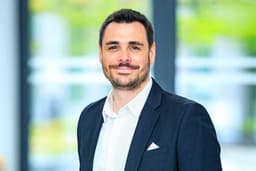
Your contact: Daniel Penninger, Managing Director